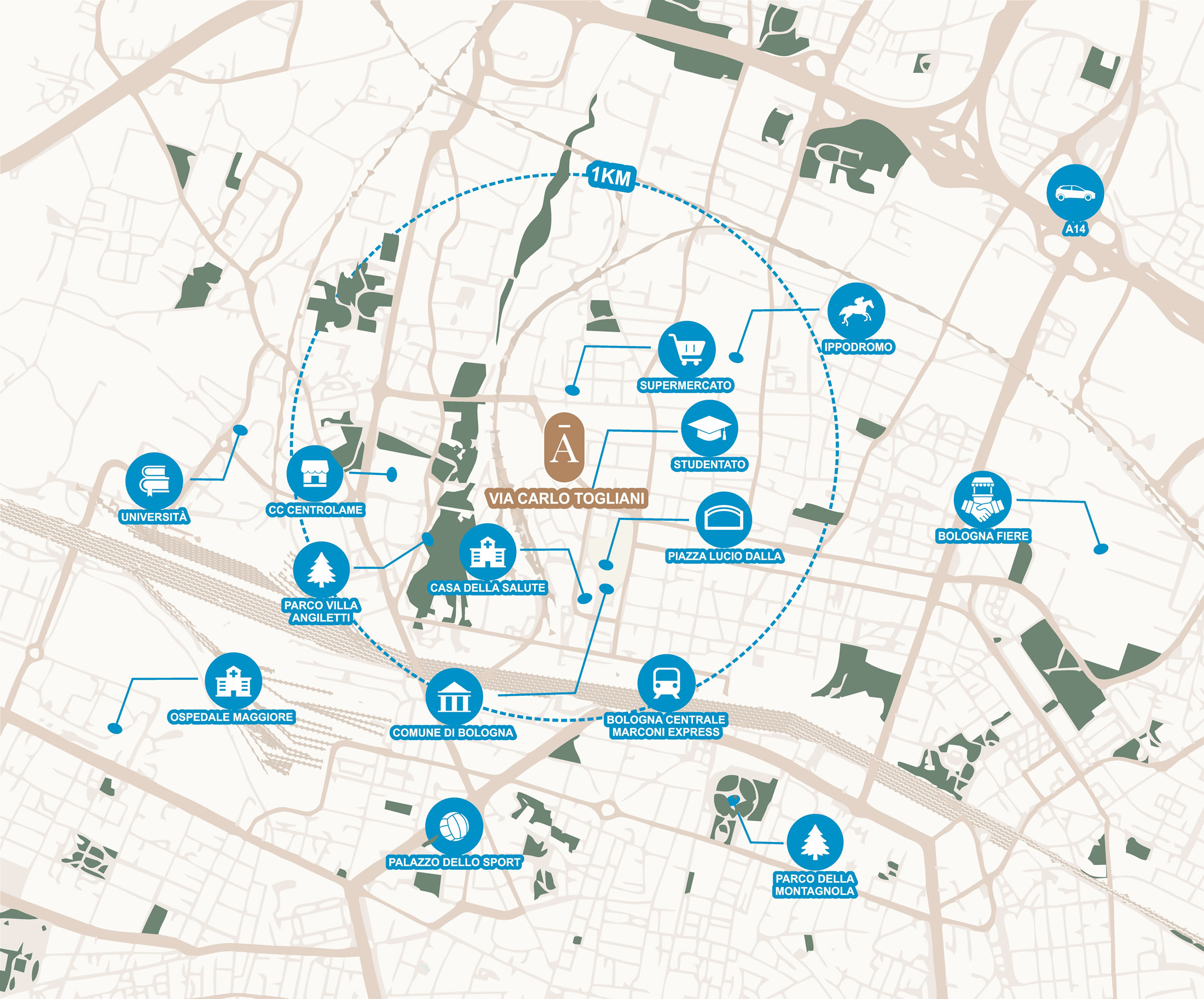
Relationships and services close to home.

Atman takes its place in one of Bologna’s most dynamic urban contexts, among the protagonists of a profound transformation that is redefining the face of the Navile district. Here, urban regeneration has given rise to a new balance between next-generation residences, public areas, services, and gardens, restoring to this part of the city an international dimension that is growing in appeal. The redevelopment of the former Mercato Ortofrutticolo, now a new urban center anchored by Piazza Lucio Dalla, together with new educational and cultural hubs and expansive open spaces, contributes to a living and evolving urban fabric oriented toward a high quality of life.

A dynamic and international neighborhood

Experiencing Atman means entering into a relationship with an increasingly international Bologna, one capable of attracting talent, students, professionals, and investors from around the world. The presence of the University, research centers, the Fiera, the Tecnopolo, and the major innovation hubs makes the city a European point of reference in the fields of knowledge, technology, and enterprise. In this context, the Navile district is establishing itself as one of the most representative expressions of this new metropolitan identity of Bologna: open, connected, and in constant evolution.

Agile and sustainable mobility

Thanks to efficient urban infrastructure and its strategic position along the north-south axis of Italy, Bologna represents a central hub for mobility in the area, including for those who travel frequently for work. The extensive motorway and rail network, strengthened by the Alta Velocità high-speed line, enables fast and fluid connections to cities such as Florence, Rome, and Naples, with Milan reachable in approximately one hour. In this context, Atman benefits from optimal connections: the historic center and the railway station are reachable within minutes, while the Marconi Express provides a rapid link to Guglielmo Marconi Airport, reinforcing the international vocation of the area. Added to this are the network of cycling and pedestrian paths supporting sustainable mobility, and the future development of the tram line, which together will make the Navile district even more agile and accessible.

Points of interest

Lidl Supermarket

3′

1′

Piazza Lucio Dalla

5′

2′

AV Station

16′

5′

Angeletti Park

18′

7′

5′

University

20′

7′

5′

Piazza Maggiore

30′

15′

15′

Exhibition District

14′

17′

Ospedale Maggiore

15′

9′

Ospedale Sant’Orsola

18′

14′

A14 Bypass

10′

"La mia casa è Piazza Grande…"

“La mia casa è Piazza Grande” sang Lucio Dalla, who captured Bologna as an iconic place in the Italian imagination and soul, conveying its most intimate meaning: a city capable of welcoming, inspiring, and leaving an indelible mark on all who choose it as their home.

An intimate and vibrant city

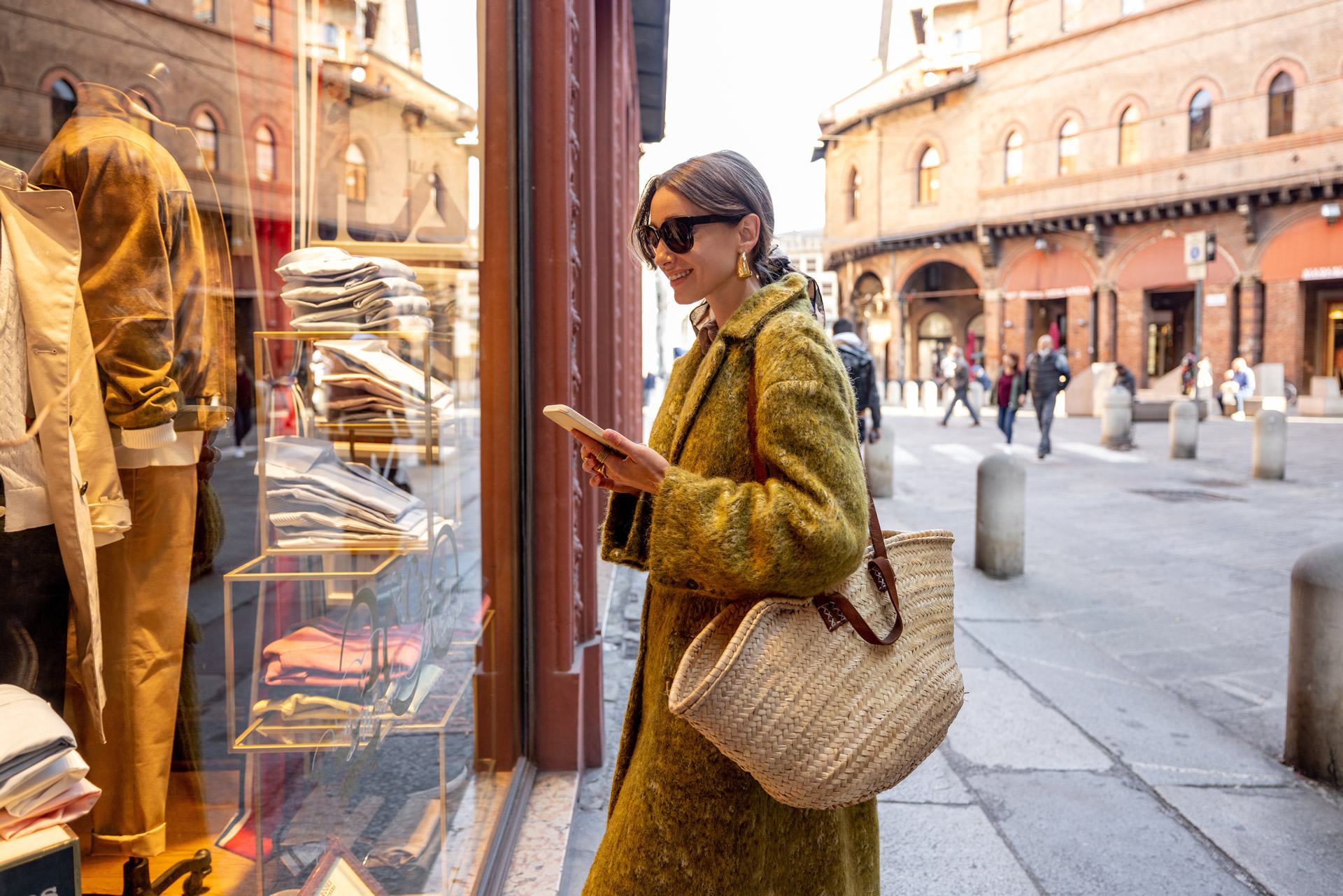
Living in Bologna means allowing yourself to be moved by ever-new emotions every day. It is the unhurried pleasure of a walk beneath the porticoes, past illuminated shop windows, quiet bookshops, historic workshops, and courtyards that hold ancient stories. It is the music drifting from venues as evening falls, the call of the theaters, the understated vitality of its piazzas. And then there is the most genuine heart of the city: the bustle of the markets, the aromas chasing one another through the stalls of the Quadrilatero, the simple gesture of stopping for a glass of wine, a conversation, a flavor that tastes of tradition. Bologna reveals itself in a simplicity that is at once cultured and convivial, vibrant and intimate, and that offers, every day, the pleasure of feeling at home.


Between shared spaces and life in the open

Alongside its urban vitality, Bologna holds within it a dimension shaped by widespread greenery and landscapes that invite you to slow down, designed as places of gathering and outdoor life. This reflects an urban planning approach that is attentive to integrating nature into the lives of its residents.

Places such as the Parco della Montagnola, one of the oldest green spaces in the city, the Giardini Margherita, a grand nineteenth-century park inspired by European Romantic models, and the Parco di Villa Angeletti have always represented the green heart of Bologna. As do the Colli Bolognesi, which trace the city’s soft skyline in a succession of paths, historic villas, and panoramic viewpoints leading all the way to the Santuario della Madonna di San Luca, a defining symbol of the city and a privileged vantage point from which to take in the entire landscape.